
It's Viewpoint Discrimination, Stupid.
D.C. judge pushes back on Hegseth's Constitutional subterfuge.

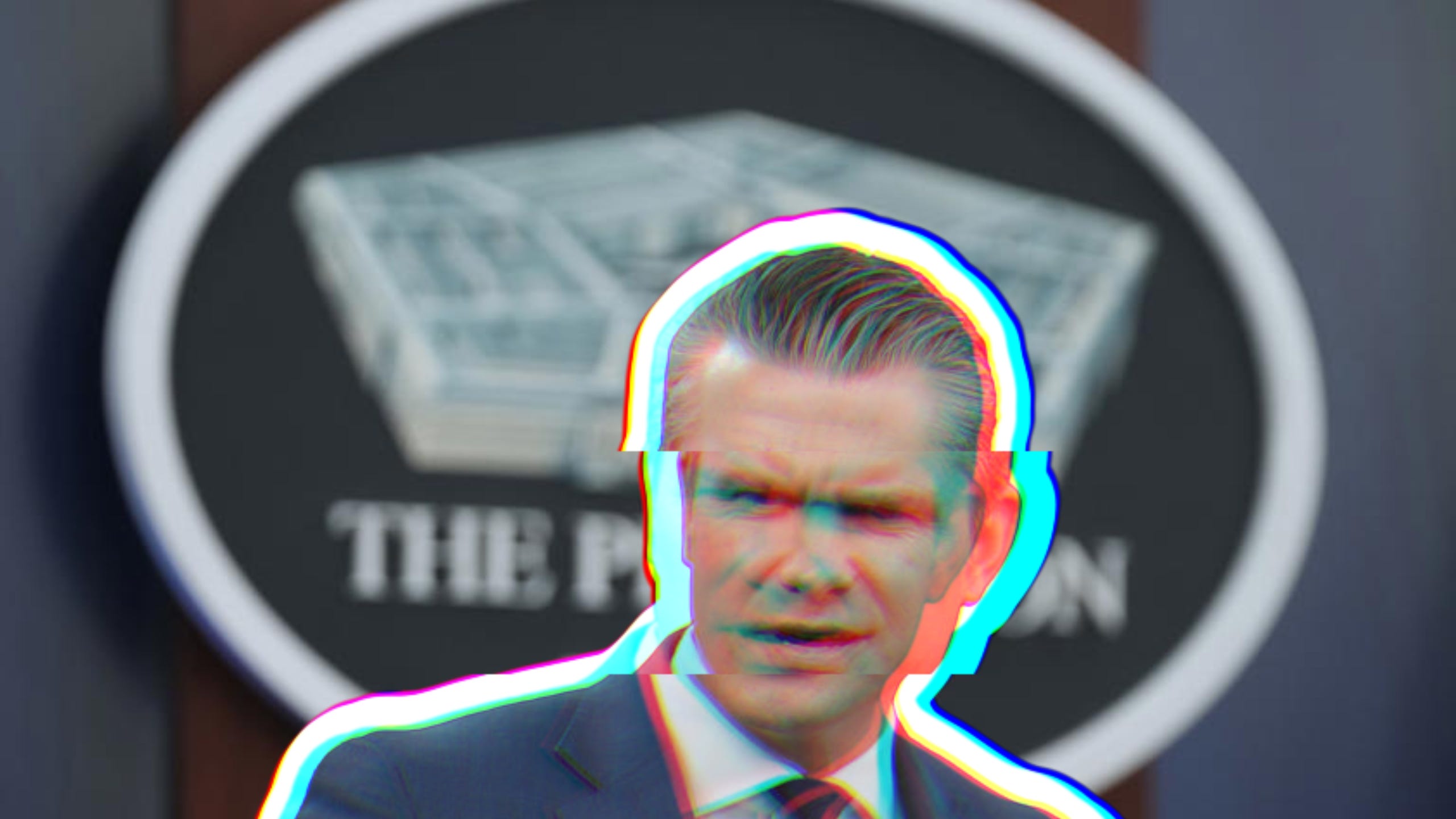
It’s the Trump administration’s signature move: invoke some ill-defined, if not bogus, claim of a bona fide executive interest—“national security” or “emergency” are the usual suspects—and turn it into a license to run roughshod over the Constitution.
That strategy hit a wall Friday when D.C. Senior Judge Paul Friedman issued a sharp, penetrating opinion striking down the Pentagon’s new press credentialing policy. He zeroes in on the constitutional flaw in a regime that, once you strip away the rhetoric, seeks to control what journalists can report about the military.
Invalidating a ham-handed DOD policy is welcome enough. But the opinion has broader force. Friedman pinpoints, and strikes down, a recurrent legal strategy for Trump 2.0: the wielding of neutral-sounding rules to sideline disfavored viewpoints and reward favored ones.
For decades, credentialed reporters operated inside the Pentagon under a system that, while hardly frictionless, allowed serious journalism to take place. Press passes meant access to briefings, officials, and the day-to-day texture of decision-making. Crucially, access did not turn on the tone or content of coverage.
Until Pete Hegseth turned it on its ear.
During his tenure as Secretary of Defense (or, War, as he prefers to style it), Hegseth has shown a sustained fixation on coverage he views as hostile. He complained bitterly about reporting on his confirmation that understandably focused on his threadbare qualifications and closet full of skeletons, including allegations of alcoholism, poor management, and sexual assault. The Pentagon’s posture hardened from there. At one point, photographers were removed from the Pentagon’s Iran War briefings after publishing images Hegseth disliked.
The new credentialing policy was not an isolated move. It was part of a larger effort to use control over access to shape the story.
The shift that prompted the lawsuit before Friedman came in stages. First, incremental limits. Escort requirements and restricted movement. Then a new credentialing regime requiring journalists to acknowledge Pentagon rules on “unauthorized disclosures” and, more ominously, “solicitation” of such information.
That last term did the work. “Solicitation,” as defined, swept broadly enough to cover the core acts of journalism: asking questions, cultivating sources, and receiving information. Under the policy, a reporter could lose credentials not only for publishing information the Department had not approved, but for asking questions that led to its disclosure.
Major outlets across the spectrum refused to sign. The New York Times, the Wall Street Journal, the Washington Post, and even Fox News. Rather than accept a system in which the Pentagon effectively policed their reporting, they walked. Then they sued.
The Pentagon’s response was specious. No one had been excluded, it said. The reporters had chosen to leave.
Enter Judge Friedman.
The government’s defense followed a now-familiar script. The policy was necessary to protect national security, prevent leaks, and safeguard sensitive information. All legitimate interests. No serious observer disputes that.
Friedman did not dispute them. He refused to take the government’s word for it.
That skepticism did not arise in a vacuum. It reflects a year of what can fairly be called a year of bad faith and evasion from the Trump administration, patterns that federal courts around the country have begun to call out, as I wrote here.
Friedman himself had warned months earlier that repeated departures from basic norms of candor might forfeit the usual presumption of regularity courts extend to executive action. His opinion here is the payout on that earlier warning.
Friedman identified two independent constitutional defects with the Pentagon’s revised access policy.
The first is vagueness, a Fifth Amendment due process problem. The government must give fair notice of what conduct is prohibited. This policy does not.
The Pentagon tried to narrow things in litigation, suggesting that only criminal solicitation was at issue. Friedman rejected that outright. The policy’s text sweeps much more broadly, covering any effort to obtain non-public information, including the vast and murky category of controlled unclassified information, of which there are more than a hundred subcategories. A journalist has no realistic way to know, in real time, what falls into those buckets or whether a source is authorized to speak.
The upshot is straightforward. When reporters cannot tell what will cost them their credentials, they ask fewer questions. That is not a side effect; it’s the motivation.
The second defect goes to the more serious defect at the core of the DoD’s revisions: viewpoint discrimination.
In First Amendment law, viewpoint discrimination is the third rail. The government can regulate access and impose neutral rules, even in nonpublic forums like the Pentagon. It cannot favor one set of views over another.
Friedman’s opinion methodically documented the actual discrimination that the policy advances.
Friedman demonstrated that Defense Department leadership was openly hostile to what it calls the mainstream media, repeatedly condemning outlets for unfavorable coverage. At the same time, it welcomed and elevated new entrants who had expressed support for the administration and its agenda.
Thus, the Pentagon okayed the tip line from Trump favorite Laura Loomer. But it refused a similar request from the Washington Post for outreach to DoD personnel. Same conduct; opposite result. The distinction was editorial alignment.
Friedman detailed the Department’s treatment of James O’Keefe, the conservative activist and founder of Project Veritas. O’Keefe received credentials despite having pleaded guilty to federal charges for entering federal property under false pretenses, conduct that falls squarely within the kinds of offenses the policy itself lists as grounds for denial. The Department’s answer was that those criteria are not automatic disqualifiers. That only underscores the problem. The rules constrain nothing. Everything depends on who you are.
By DOD’s own public statements, the new credentialed corps consists of outlets that will “get real news” and are “on board and willing to serve.” The ones who refused to sign are derided as propagandists or worse.
Friedman’s conclusion was blunt but unassailable. The policy’s purpose and effect are to weed out disfavored journalists and replace them with those willing to play along, in other words, to discriminate based on viewpoint.
The government’s fallback argument was likewise familiar. Access is a privilege, not a right. The Pentagon is a nonpublic forum, so the Department can set the terms.
Government control over a nonpublic forum does permit neutral, reasonable conditions of access. Stay out of secure areas. Follow safety protocols. Those kinds of restrictions regulate conduct, not content, and courts have generally upheld them when applied evenhandedly.
But that authority does not extend to deciding who may enter based on what they are likely to say. Once access turns on editorial stance, the government has crossed into viewpoint discrimination. You can regulate where reporters go. You can protect classified areas. You cannot condition access on whether they are willing to toe the line.
The administration will appeal Friedman’s decision, and the D.C. Circuit or potentially the Supreme Court will have the final word. Higher courts have not always been as clear-eyed about pretext as Friedman is here.
But whatever happens in the higher courts, the opinion does something important. It zeroed in on the government’s stock move of dressing up viewpoint discrimination in the language of national security. Friedman’s comeback was simple: after a year of squirreliness and doublespeak, don’t take the administration at its word; delve into what is actually happening on the ground.
Many of us have long since adopted that as the first rule of citizenship for Trump 2.0. It’s just common sense to take this administration’s assertions with a jaundiced eye. The federal courts, institutionally inclined to comity towards other branches, have lagged behind. But opinions like Friedman’s show them beginning to confront head-on the administration’s lying ways.
Talk to you later.
Thank you for such a clear explanation of this decision. Thank goodness for a wise methodical judge. We need clarity in the midst of all the #smoke.
The guy's an idiot. A perfect example of what Trump looks for in a cabinet member - stupid, obnoxious, uncouth, a*skisser, unfit (especially for the job he holds), and just a lack of any understanding of the Constitution. Thank goodness the judge was smart enough to get through all of the garbage.