
It’s the Fraud, Stupid
Trump and DOJ are out of moves before Judge Williams.

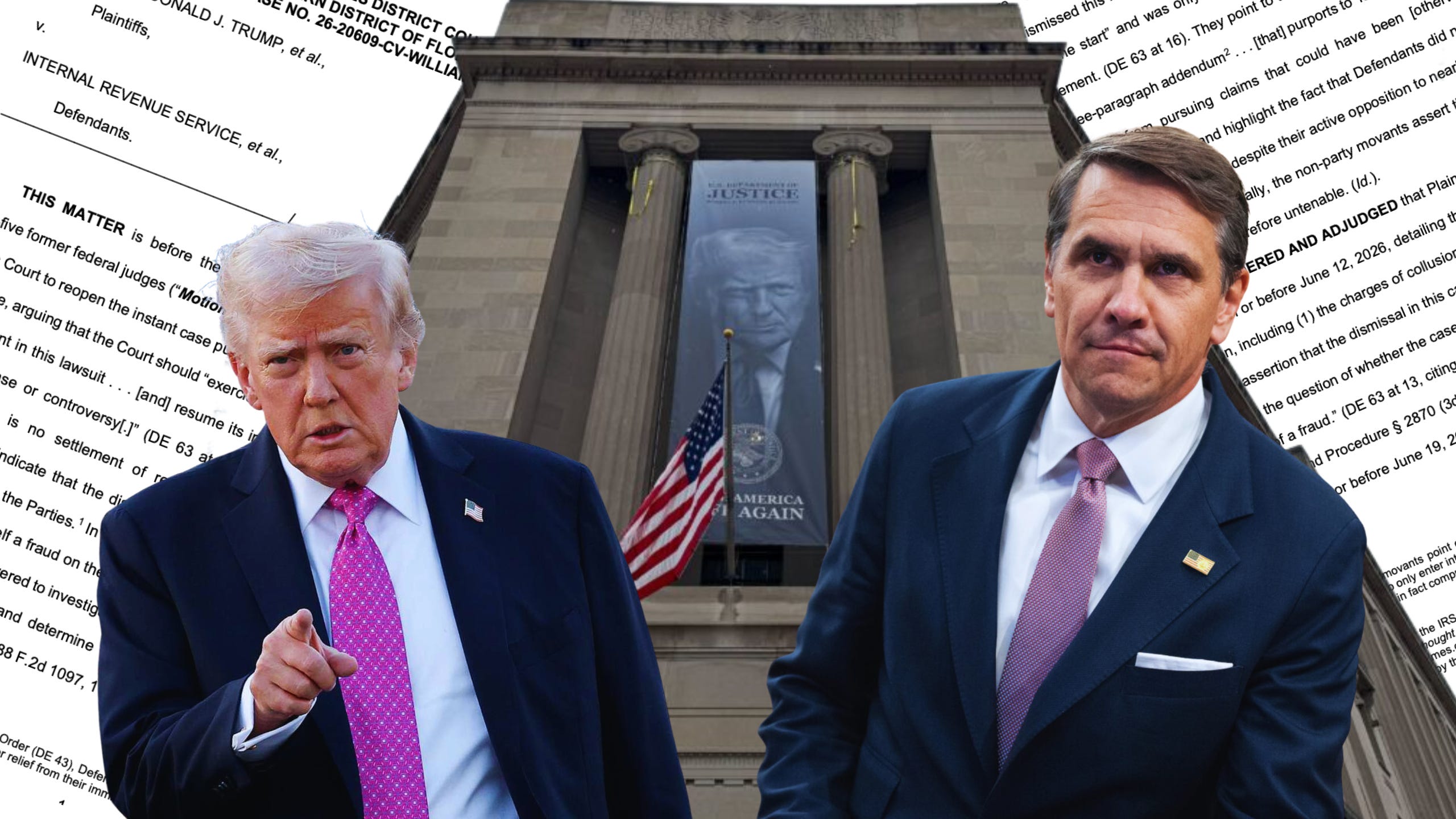
This article is exclusive to paid subscribers because it’s our third essay of the week. Our subscribers are the sole support for this Substack. I hope you’ll encourage others to subscribe and, if your circumstances permit, become a paid subscriber yourself. It’s what makes my work and the work of my team possible.
Editor’s note: Part I of this two-part essay analyzed the DOJ’s argument that the dispute about the $1.776 billion slush fund is now moot. This part analyzes why the DOJ fares no better before Judge Williams, who has reopened the settlement agreement to consider, among other things, “grievous” allegations that Trump and the DOJ engineered a fraud on the court.
In Part I, I explained why Blanche’s telling a House Committee “we’re not moving forward with the fund” doesn’t moot the legal challenges. The government seems to believe that Blanche’s statement ends the matter. But, among other problems, the Anti-Weaponization Fund is the consideration Trump received in exchange for dropping his lawsuit. It is Trump’s to enforce. The government cannot provide something for value and then unilaterally take it back.
Unless, of course, the entire thing was a contrived, collusive, unconstitutional arrangement from the start—which brings us to Judge Kathleen Williams.
Trump originally brought his suit against the IRS in the Southern District of Florida, where it was assigned to Judge Williams. The suit was a loser from the jump. The IRS had prevailed in comparable circumstances, and its lawyers wrote a long memo urging the DOJ to move to dismiss Trump’s lawsuit.
But there was a more fundamental problem, one that undermined the legitimacy of the lawsuit in the first place. Trump controlled both sides of this litigation. The case caption may have been Trump v. IRS, but in reality, the parties were both controlled by the president: Trump had “jumped the v.” Cases in which one party controls both sides are not “cases or controversies” under the Constitution and federal courts may not hear them.
Judge Williams saw the problems early. She ordered briefing on whether the case presented a genuine Article III controversy at all, and appointed a formidable set of amici curiae to present the arguments that neither Trump nor his captured DOJ could be trusted to make. Fearing Williams’s scrutiny, DOJ filed a voluntary dismissal on May 18, two days before the scheduled hearing.
But after Williams entered the dismissal, thirty-five former federal judges filed a motion pointing out that Williams could reopen the case and revisit the settlement to determine if it had been a fraud on the court. They argued that the lawsuit “was collusive from the start” and had been voluntarily dismissed solely to avoid judicial scrutiny of that scheme.
Calling the judges’ allegations “grievous,” Williams reopened the settlement and issued an order that requires the plaintiffs to answer three pointed questions by Friday, June 12: whether the parties were truly adverse; whether the dismissal was premised on deception; and whether the court was the victim of a fraud. The order also invoked Rule 11, which raises the prospect that Williams could impose sanctions against attorneys that she finds have abused the judicial process.
