
Distracter-in-Chief
South American bombings one of many scandals that rage on while we’re focused elsewhere.

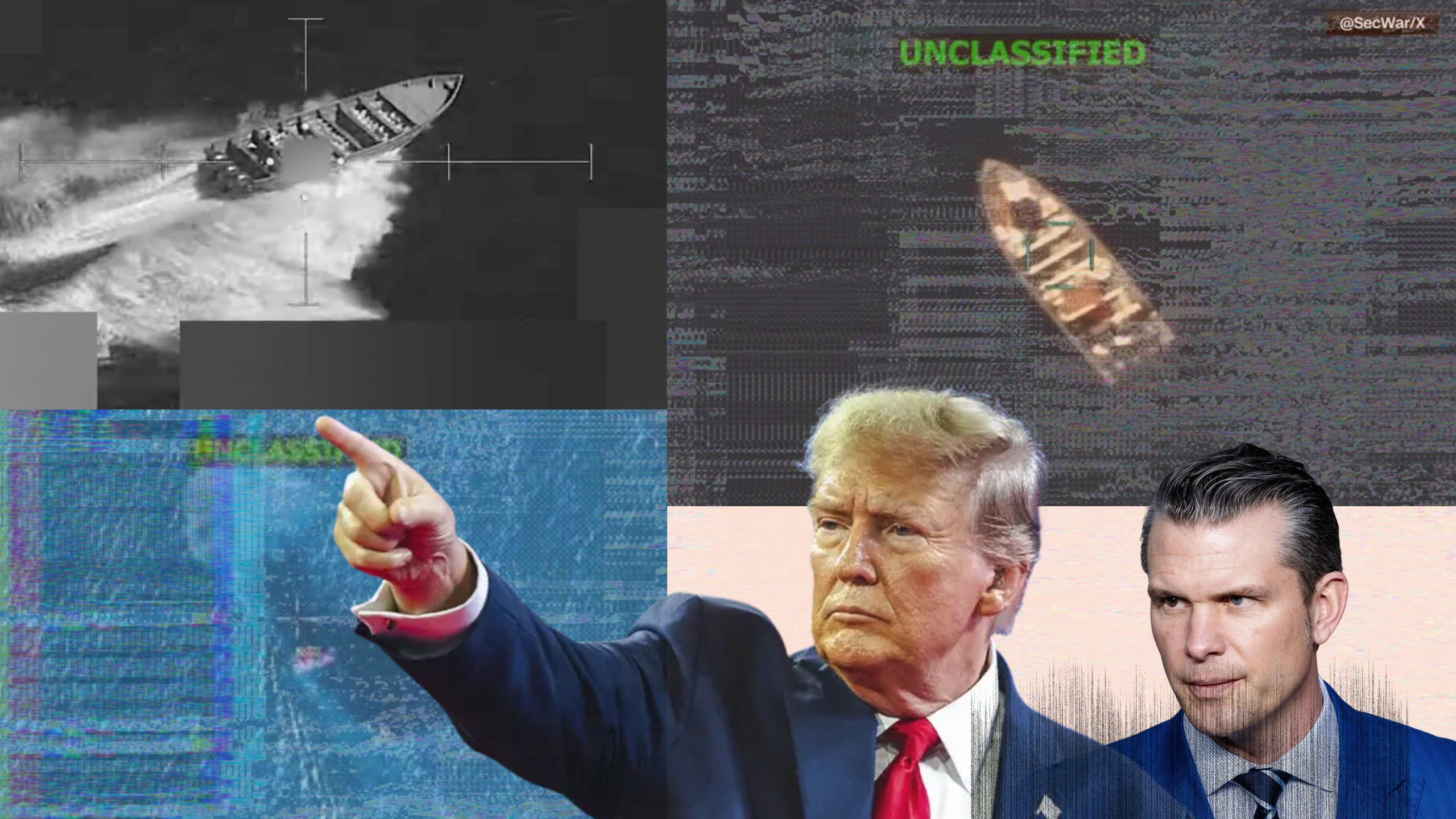
On top of his many other faults, Trump is among the most erratic presidents in American history. He lurches from scandal to scandal like a drunken sailor on leave.
Part of it is temperamental. Trump has the attention span of an eight-year-old, and seems genuinely incapable of sustained focus on any single problem. His own staff learned early to condense the Presidential Daily Brief into bullet points, maps, and graphics, because the president wouldn’t read the full document. Jim Mattis, his own Secretary of Defense in his first term, reportedly said Trump had the understanding of a fifth or sixth-grader.
Part of the erraticness feels tactical: a seasoned con man’s instinct for escape. He senses when political heat is becoming dangerous and when to pivot to a new subject, throw a new shiny object in front of a press corps that can rarely resist chasing it. The political and media energy that had been trained on Scandal A suddenly redirects to Scandal B, and the country moves on.
What we rarely stop to notice is what happens to Scandal A after the cameras leave.
The answer, almost invariably, is that it keeps happening. The harm continues to compound, in the dark, without accountability, without the friction that public attention provides. Trump lurches to a new streetlight, and the cameras follow him, but the damage continues to mount where we have stopped looking.
Nowhere is this pattern more stark, or more alarming, than the United States Military’s continued extrajudicial bombing in the waters off South America.
When the first strike came, on September 2, 2025, it generated exactly the kind of legal and moral firestorm it deserved. The military bombed a vessel it claimed was carrying drugs from Venezuela, initially killing nine people. Two survivors clung to the burning wreckage. A second strike was ordered to kill them. The Washington Post reported that Defense Secretary Pete Hegseth’s directive had been to “kill everybody.”
Marty Lederman, a former senior official at DOJ’s Office of Legal Counsel, published an exhaustive analysis at Just Security documenting the multiple ways the double-tap strike was unlawful: no Article II authority, violations of the assassination ban, a fundamental breach of the law of armed conflict that prohibits lethal force against civilians regardless of suspected criminality. Harvard Professor Jack Goldsmith, a conservative who headed OLC in the George W. Bush administration, called the execution of shipwrecked survivors what it was: murder.
The Former JAGs Working Group—a coalition of retired senior military lawyers, including former Judge Advocates General from multiple branches—characterized the episodes as war crimes, murder, or both, and stated that orders like those “are the kinds of ‘patently illegal orders’ all military members have a duty to disobey.”
Then, on January 3rd, Trump announced that U.S. forces had captured the Venezuelan President Nicolás Maduro himself in the dead of night and flown him to New York to face narco-terrorism charges. The war crimes debate didn’t disappear. It was reframed as a prelude to victory. The boat strikes that former JAGs had called patently illegal became a sort of softening the ground for a regime change—itself an illegal basis for an act of war. The focus changed. And then we moved on: to Epstein, to Iran, to the tariff wars, to reprisal prosecutions, to whatever mischief Trump or the DOJ or the Republican House was serving up.
As it turns out, however, the bombing only intensified. The nation’s attention just went elsewhere.
Here’s what’s been happening while we’ve been focused on other abuses of power.
The New York Times reported this weekend that more than 200 people have now been killed in more than 60 strikes. When former JAGs called the orders war crimes and Jack Goldsmith called the execution of shipwrecked survivors murder, the death toll stood at eleven. That was the first day.
The campaign has expanded from the Caribbean to the eastern Pacific, now targeting boats off the coasts of Colombia and Ecuador. Quietly, under Hegseth’s direction, the military has added attack aircraft and armed drones operating from bases in El Salvador and Puerto Rico.
The entire campaign has been undertaken in secrecy: the administration’s only public accounting has been grainy videos posted to social media.
In Colombia and Ecuador, the bombings are hollowing out coastal communities. Fishing towns have become ghost towns. Fishermen who cannot be distinguished from traffickers—and in some cases are pressured by traffickers to ferry cargo—have stopped going to sea.
As surely as the first sorties, if not more, the proliferating bombings continue to violate the law and bring our country into disrepute.
The administration justifies the killings as drug interdiction. That claim is spurious, given that the strikes have had no discernible impact on the amount of cocaine reaching the United States.
The deeper legal justification relies on the fiction that designating cartels as terrorist organizations transforms their members into enemy combatants in an armed conflict, triggering supposed wartime killing authority that would otherwise be flatly illegal. That argument, well, it doesn’t hold water.
The law of armed conflict still prohibits lethal force against people who pose no imminent threat of violence, regardless of what crimes they may be committing. Every legal objection Lederman raised, every charge Goldsmith leveled, applies with equal force to all the strikes that followed. There are more than sixty now, each carried out against civilians whom the military could not lawfully kill from the air, even if they were running drugs. It is an extended campaign of extrajudicial killing conducted without congressional authorization, without transparency, without accountability, at a cost now exceeding $4.7 billion, and apparently without end.
This is the problem that the Trump era has never fully solved. We have no adequate mechanism for keeping full watch on scandals the president has moved past, at least in real time; much of the damage will await the chronicling of history.
The organizations and journalists who cover this administration are solid, and the New York Times deserves credit for the reporting that brought the Venezuela campaign back into view. But we cannot rely on episodic bursts of attention to do the work that sustained institutional accountability requires. Each new scandal pulls the oxygen away from the last one.
We are already giving this tinpot dictator far more attention than he deserves, and yet not nearly enough to keep vigil over the enormous costs of his lawlessness.
The Venezuela bombing campaign is only one story of a scandal that continued to unfold after we stopped paying attention. There are many others. Signalgate, in which the Defense Secretary shared classified strike plans on an unsecured app and joked about it afterward; the Epstein files, released in heavily redacted form with Trump’s name appearing in flight logs and abuse allegations that the Justice Department quietly buried; the systematic firing of inspectors general, prosecutors, and military officers whose only offense was independence; and the insane, unprecedented level of emoluments violations, as Trump induces foreign governments and domestic supplicants to funnel enormous sums to Trump properties. Just to name a few.
One lesson these ongoing outrages bring home is the critical need for effective, wide-ranging oversight. That needs to begin with the Democrats’ return to majority in one or both Houses of Congress, though even then, we can be confident that Trump and his administration will continue to throw up unlawful obstacles to accountability.
Two hundred people killed in secret, in international waters, without legal authority, without evidence of effect, at a cost of nearly five billion dollars. It is still happening, under our noses as it were, but we’re focused on other things.
I’m reminded of a quote from Andor, a television show that depicts fascism, disinformation, and state-sanctioned violence by the Empire in Star Wars: “It’s so confusing, isn’t it? So much going wrong, so much to say, and all of it happening so quickly. The pace of oppression outstrips our ability to understand it, and that is the real trick of the Imperial thought machine: it’s easier to hide behind 40 atrocities than a single incident.”
It’s not just the Empire in a galaxy far, far away. It’s all part of the Project 2025 game plan—throw so much so fast that our community can’t keep track of it all, or even much of it, in real time.
And that’s exactly how Trump and Hegseth want it.
Talk to you later.
Trump was voted in by those who think like a 5th and 6th grader, as he does. So that doesn't say much for the majority of American intelligence .
I object to your maligning of eight year olds. My kids had much longer attention spans when they were that age.