
Towards a More Perfect Union
Reflections on the Declaration of Independence at 250.

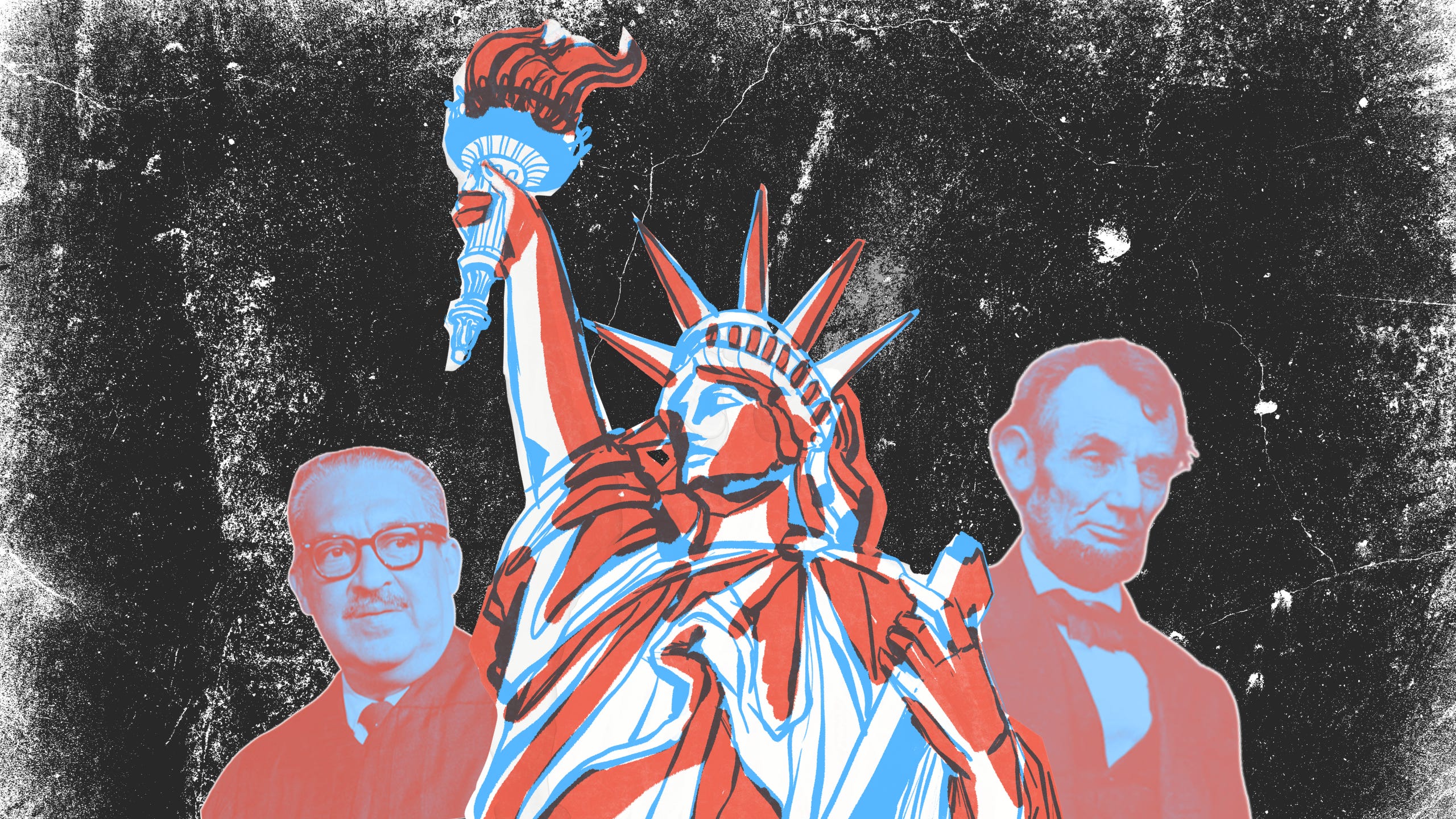
This article is exclusive to paid subscribers because it is our third essay of the week. Today, we celebrate the 250th anniversary of the Declaration of Independence at a time when our democracy is under authoritarian attack. Our country has survived this long because people have kept showing up for it—reading, protesting, and standing up for the rule of law. That’s what this community is doing too. So whether or not you’re able to subscribe right now, thank you for being part of it. Wishing you a happy and reflective July 4th weekend.
250 years ago today, the Declaration of Independence was signed in Philadelphia, launching an experiment in self-governance that has advanced in fits and starts, progress and retrenchment, ever since.
The Declaration is a fundamentally different document from the Constitution, which came in 1787, eleven years later, and the distinction matters more than most anniversary coverage will acknowledge—and more than most of our current leaders seem to understand or care about.
The Constitution is a blueprint for governance, speaking in the register of political architecture, including a few brute operational accommodations among different constituencies that continue to plague us to this day. The Declaration speaks in the register of moral aspiration—universal claims about human equality and dignity, not yet reduced to the operational necessities and blunt political trade-offs between competing interests.
The distinction was thrown into sharp relief just days ago, when Anne Applebaum noted in The Atlantic that J.D. Vance, in his Republican National Convention speech two years ago, explicitly dismissed the Declaration’s “abstractions”—all men are created equal, life, liberty, the pursuit of happiness—in favor of what he called the pull of home, clan, and ancestral graveyards. “People will not fight for abstractions,” Vance said, “but they will fight for their home.” Blood and soil, in other words, not ideas and principles. It is difficult to imagine a more direct repudiation of what we are supposed to be celebrating this week.
July 4th is an apt day for taking our moral measure as a society. Certainly, that’s true of this particular July 4th, both because of its historic number and because of the urgent need to come to grips with the erosion in the Declaration’s moral aspirations that the country is now experiencing.
The Declaration is particularly associated with Abraham Lincoln and a fundamental shift around his presidency in the moral underpinnings of the country. In his landmark study, Lincoln at Gettysburg, Garry Wills sets out a deeply influential thesis about the Gettysburg Address. Wills argues that with his 272 words at Gettysburg, Lincoln remade our national charter and legacy.
What Lincoln achieved, Wills argues, was a revolution in the American political imagination: he moved the nation’s founding moment from Philadelphia in 1787 to Philadelphia in 1776—from the compromises of the Constitution to the promises of the Declaration. Relatedly, he elevated equality to the core constitutional value decades before the 14th Amendment finally wrote it into the text.
The Gettysburg Address, as Wills puts it, has become “perhaps even more influential than the Declaration itself, since it determines how we read the Declaration.”
The Chicago Times understood what Lincoln was doing and responded with fury, “How dare he, then, standing on their graves, misstate the cause for which they died, and libel the statesmen who founded the government?” Lincoln’s critics knew he was pulling off a sort of ideological coup—relocating the nation’s moral center of gravity from the compromise-laden machinery of the Constitution of September 17, 1787, to the ringing promises of the Declaration of July 4th,1776.
This is why we celebrate July Fourth and not September 17th. It is the Declaration’s language—equality, pursuit of happiness, the proposition that all men are created equal—that Americans actually enshrine. The Constitution is the document we argue about. The Declaration is the document that reflects our fondest aspirations of our moral and civic life, the society and selves we aspire to become.
Contemplating those highest sentiments necessarily brings us nose-to-nose with the still yawning gap between our ideals and our lived political and social selves.
The 250th anniversary doesn’t require us to don a national hairshirt. But it calls for a hard look at where we stand and whether our trajectory is steadily upwards.
Most fundamentally, we need to reflect on the hard fact that we have never been a unified nation. The idea that some golden era of American consensus preceded our current fractures is nostalgia masquerading as history.
The red-blue divide is not just a modern-day malady. It is, as Harvard’s Steven Levitsky and Daniel Ziblatt document in Tyranny of the Minority, the predictable consequence of constitutional structures designed in a pre-democratic age that have never been adequately modernized.
The last moment of widespread national reflection on the measure of our founding documents with our grandest moral aspirations as a society was in 1987, the bicentennial of the Constitution. I had the insane privilege that year of clerking for Justice Thurgood Marshall. Marshall, a thoroughgoing patriot and consummate believer in the law’s ability to address the nation’s failings, saw a national celebration that he thought was not fully earned or self-reflective. He wrote an essay that went immediately into the canon of constitutional criticism. It was entitled The Constitution’s Bicentennial: Commemorating the Wrong Document?
