
Just Add ICE
The travails of representing a rogue agency.

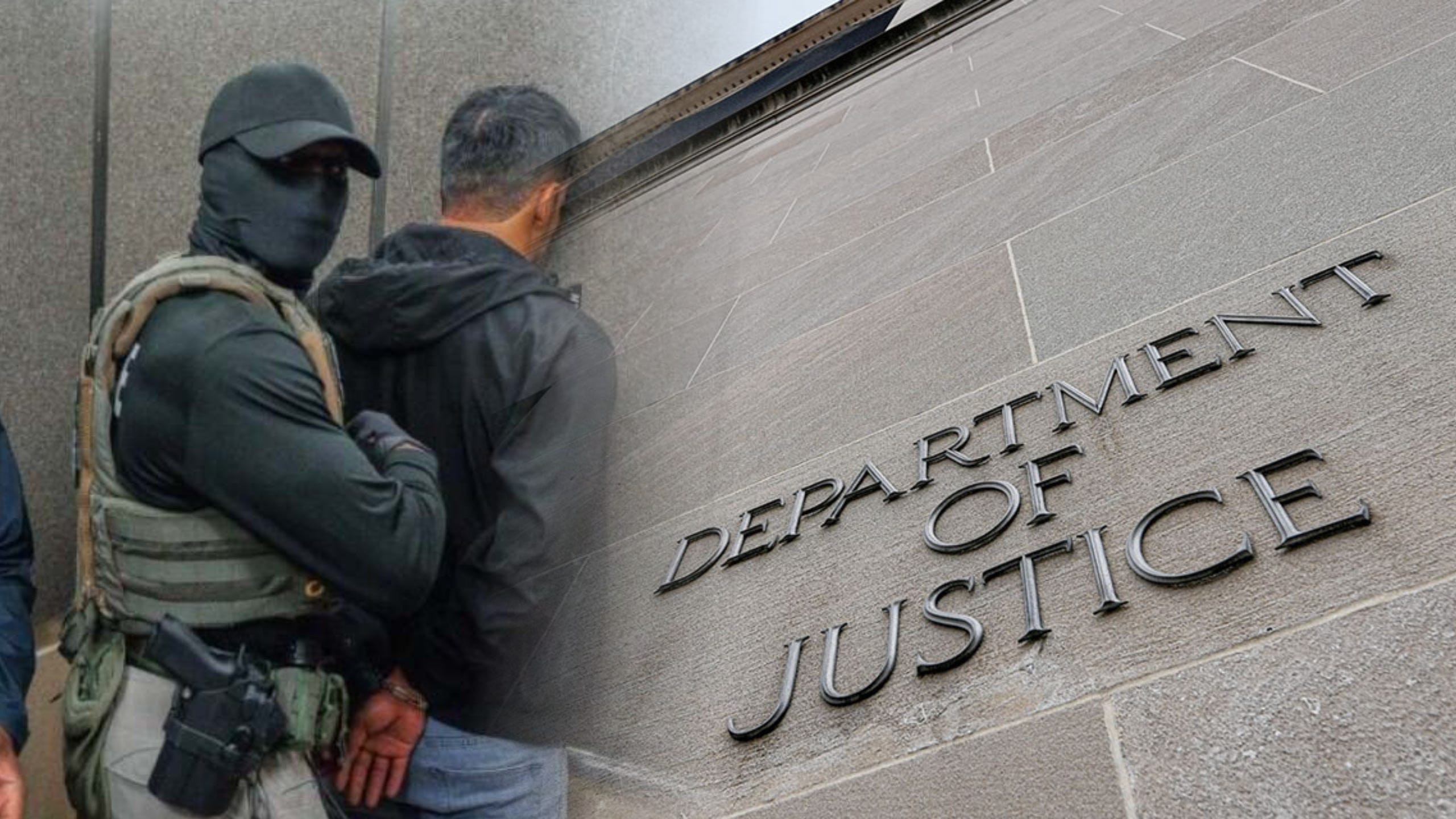
Last week, the Department of Homeland Security posted a press release on its official website with a large, bold headline: “Activist Biden Judge Releases Violent Criminal Illegal Alien Wanted for Murder.” The release named the judge, Melissa DuBose, and went on to accuse her of knowingly freeing a murder suspect because she was, “an activist judge trying to thwart President Trump’s mandate from the American people to remove criminal illegal aliens from our communities.”
There was one problem. The judge had no idea about the murder case. That’s because the DOJ lawyer had failed to include that detail in arguing against release. And that in turn was because Immigration and Customs Enforcement (ICE) had instructed the lawyer to withhold it from Judge DuBose.
The case vividly illustrates the untenable position of DOJ attorneys pressed into service to represent ICE. It is hard enough to work as a DOJ lawyer under the new regime, which has shredded the principles of federal prosecution and replaced them with an all-encompassing command to serve at Donald Trump’s quixotic pleasure. But add ICE as your client and the difficulty becomes nigh on impossible, as attorneys across the country have discovered while trying to represent an agency that ignores legal constraints, exhibits contempt for the rule of law, and withholds information from its own lawyers.
This case is the latest flashpoint over a legal issue that has become the defining battle in immigration courts around the country. The Trump administration has taken the position that even people who have been in the United States for decades—working, paying taxes, and raising children—are forevermore “applicants for admission,” no different from those who first present themselves at the border. Over 300 district courts have rejected the administration’s position, but the courts of appeals have split 2-2, and the issue is almost certainly going to the Supreme Court.
In the meantime, ICE has earned the ire of court after court. Its contempt for court orders in exactly these kinds of detention cases has been so flagrant that the chief judge of the District of Minnesota said it had likely violated more court orders in January 2026 alone than some federal agencies have violated in their entire existence.
Around the same time, a DOJ attorney detailed to that same district—and promptly handed 88 cases in under a month—told a judge she wished he would hold her in contempt so she could get 24 hours of sleep. “The system sucks,” she told him. The administration removed her from her post the next day.
In the case before Judge DuBose, the United States is seeking to summarily deport Bryan Rafael Gomez, a Dominican national who has been living in the United States for years. Gomez was detained by ICE in April after a local arrest in Worcester, Massachusetts on assault and battery charges. His lawyers filed for habeas corpus in the District of Rhode Island, arguing that the detention statute ICE invoked did not apply to someone in his situation. DuBose granted the writ, ordering Gomez released under conditions pending a bond hearing.
What DuBose did not know, because the DOJ had failed to tell her, was that Gomez was the subject of a murder warrant in the Dominican Republic. ICE knew. In fact, by the time of the hearing, it had already published the warrant in its own press release two weeks earlier, listing Gomez as one of five fugitives wanted for murder abroad that ICE’s Boston office had lately arrested.
But ICE had also told the Assistant U.S. Attorney handling the habeas case, Kevin Bolan, that he could not disclose the warrant to the court, because—or so ICE said—the Dominican authorities had not yet formally authorized its use in legal proceedings. So Bolan filed a response to the habeas petition that contained nothing about the warrant, nothing about criminal history, and nothing about dangerousness or risk of flight.
Two days after DuBose ordered Gomez released, ICE issued the scurrilous press release, accusing the judge of freeing a wanted murderer. DHS Acting Assistant Secretary Lauren Bis piled on, echoing the charge that DuBose was “yet another example of an activist judge” trying to defeat Trump’s immigration mandate.
After DuBose found out that she had been sandbagged, she issued a show-cause order demanding an explanation for why the government should not be held in contempt. At the hearing that followed, a mortified Bolan apologized without reservation and told the court that ICE had instructed him to withhold the warrant. He insisted that he had not known, when he filed his silent response, that ICE had already published the same information.
That point revealed that the reasoning ICE had fed him for secrecy was another fiction: ICE itself had blasted it on the internet a fortnight earlier. As Bolan explained contritely to the court, one of the things he should have done was “conduct something that would have been very simple to do: which is to conduct a Google search.”
The First Assistant U.S. Attorney in Bolan’s office also issued a correction acknowledging that the judge had not known about the warrant. DHS responded to the public repudiation of its press release by referring reporters back to the press release. That release, as DuBose noted, was an offense in itself: not only false but dangerous to judges and court personnel. “It puts people at risk,” she said. “It’s a threat to judicial security.”
Both Bolan and the First Assistant are holdovers from the previous administration. They are what passes in this deconstructed DOJ for old school. Bolan is a former partner at White & Case who came to DOJ in 2023. He is the sort of credentialed AUSA that used to be the norm in the Department, when a position in the U.S. Attorney’s office was the pinnacle of the profession and law firm partners lined up to take pay cuts to join it. Now the Department has been ravaged, and the latest embarrassing news is that it has taken to offering hiring bonuses to try to refill its depleted ranks.
Although Bolan fell on his sword at the hearing, DuBose, the next day, referred him to a formal disciplinary hearing on the question of whether he violated his duty of candor to the court. The hearing is under the aegis of the Rhode Island district court, and it will be conducted by a magistrate or bankruptcy judge.
The referral is tough medicine for a lawyer who was, as DuBose herself acknowledged, primarily the instrument of ICE’s misconduct rather than its author. Whether he technically violated the duty of candor by following legal instructions is a nuanced legal question. But if nothing else, Bolan could have filed something under seal, alerting the judge to Gomez’s warrant without publicly disclosing it. DuBose criticized Bolan on that very point, noting that courts routinely handle sensitive information that way. “There was a decision made not to be truthful to the court,” she said.
The more important point is that DOJ lawyers are the ones who appear before the federal judiciary, making them the only actors in the system the judge can directly call to account. If DuBose tried to haul ICE officials directly before her, she would face a jurisdictional fight she might well lose. The disciplinary proceeding, with Bolan at its center, is the best available mechanism for examining ICE’s conduct. The formal inquiry into Bolan’s conduct will extend, I expect, to scrutiny of ICE’s behavior, which here appears to have been its characteristic mix of fecklessness and contempt.
Of course, the inquiry can extend only to the four corners of the conduct in this case. But the episode is just the latest example of ICE’s routine high-handedness in dealing with—and giving little account to—DOJ lawyers. From the early days of Trump 2.0, the agency has repeatedly put the front-line DOJ lawyers in terrible spots in immigration cases, leaving hapless AUSAs to apologize for ICE’s multiple transgressions. And at crucial junctures, it has been abetted by DOJ high officials, including Blanche and now-Judge Emil Bove, who put Trump’s zeal to deport as many aliens as possible over the Department’s duty to the court.
The whole episode would never have happened in a well-functioning executive branch. The Deputy Attorney General would have phoned her equivalent at DHS, read them the riot act, and instructed them never again to put an AUSA in that position.
But we have the opposite of a well-functioning executive branch. The mission of every government attorney has been redefined as serving Trump personally. Worse, during Trump 2.0, ICE—never the most reined-in of federal agencies—has taken on a distinct swagger that sets it apart even from other Trump-captured federal law enforcement agencies. It may be the bête noire of federal courts, but it is the fair-haired child of Stephen Miller and the president, which provides a large measure of impunity. If there is a line beyond which ICE cannot go, we have yet to see it.
As of this writing, the dishonest, incendiary press release is still up on the DHS website.
Talk to you later.
Thank you SO much for detailing this not simply feckless but dishonest and contemptuous conduct by this administration that is being foisted upon lawyers who are trying their best to honor their oaths as attorneys. Those directing this administration have no shame or honor or respect for the rule of law.
The DHS should be forced to post a retraction of the article and apology to Judge DeBose for their deceitful conduct and article. I wish she could get some kind of compensation.